Everyday Carry and Safety Tips from condition1combat.com Self Defense Classes
Safety, like conditioning, is built in layers. Gear helps, but habits decide outcomes. After years coaching and learning beside students at Condition 1 Combat Center, I see the same pattern: the people who stay ahead of trouble keep their everyday carry simple, maintain strong awareness, and pair equipment with honest skill. The gym’s self defense classes connect those dots. They put tools in your hands, refine your timing under pressure, and give you a plan for the minute after the adrenaline hits. What follows are practical takeaways, tested on mats and sidewalks, that can help you move through your day with more confidence and fewer blind spots.
What everyday carry really means
EDC tends to get framed as pocket gear. In class, we redefine it as the system you carry in your head, your body, and your pockets. That includes:
- Decisions made 10 seconds before a problem, like where you park or how you approach your car door.
- Fitness and technique built during MMA, muay thai, boxing, or brazilian jiu jitsu training, which become the engine behind your choices.
- A few compact tools that solve predictable problems, not a catalog of gadgets.
At the Condition 1 Combat Center mma gym, coaches stress that your carry should reflect your environment. A parent picking up kids has different needs than a bartender walking to a late-night lot. Good EDC is https://condition1combat.com/ intentional, not imitative.
Principles from the mat that transfer to the street
Time on the mats builds movement quality, stress tolerance, and judgment. During self defense classes at Condition 1 Combat Center, we run short, high-pressure scenarios to test decision-making. Here are three principles that consistently hold up outside the gym.
-
Position first, power second. Whether you come from the boxing gym side or the bjj gym schedule, your body alignment decides how much power you can apply and whether you can escape. On the street, that means pivoting to an exit, using a car door as a barrier, or posting a forearm to keep space.
-
Win the first two seconds. The first clear action, even if modest, often sets the tone. That might be moving laterally instead of freezing, issuing a firm verbal command, or deploying pepper spray while retreating. Hesitation compresses options.
-
Solve for the aftermath. We practice the next one minute in class. That means checking for injuries, scanning for the second threat, calling 911 clearly, and preserving evidence. People tend to relax after the peak moment, which is exactly when they make avoidable errors.
Awareness, without paranoia
Awareness can slide into anxiety if you approach it as a constant red alert. We teach students to build small, sustainable habits that create useful information without mental fatigue. For example, when walking into a coffee shop, glance at shoes and hands on the way to the counter. Shoes tell you if someone just came from a construction site, a gym, or a formal office. Hands show whether anyone is holding or hiding something. The glance takes one second, but it tells you how tightly to hold your wallet and where to stand in line.
Another useful habit is tracking normal patterns in your regular spaces. If your office parking lot is usually half-full on Fridays and suddenly packed at 10 p.m., that is a nudge to park closer to light, lock in your phone light setting, and avoid scrolling as you walk.
The compact EDC that actually gets carried
You cannot use what you leave at home. We aim to keep pocket loadouts under 12 ounces total, so everything disappears into normal clothing and you stop thinking about it. The list below covers the core items that see the most real-world use across students at the mma gym Condition 1 Combat Center and our broader community.
- Compact flashlight with a tail switch, at least 200 lumens, plus a low mode for map reading. Light deters, identifies, and buys seconds. It also finds keys under a car, which is when many people get surprised.
- Phone with medical ID setup, emergency contacts labeled “ICE,” and a slim battery card or cable. The phone is your map, camera, emergency call, and time-check to pace your evening.
- Pepper spray rated for a strong stream pattern, carried in a pocket you can reach with your dominant hand. Practice drawing and indexing it without looking.
- Tourniquet or a vacuum-sealed pressure bandage in a thin sleeve. A parking lot laceration or workshop injury is more likely than a movie-style ambush. Fast bleeding control saves lives.
- Audible personal alarm or small whistle for layered signaling, especially in crowded spaces where a yell blends into background noise.
Students often ask about knives and firearms. Those are context and training decisions. Laws vary by city and state. At condition1combat.com, our instructors point people to verified courses and local statutes first, then to safe storage and retention skills. If you cannot articulate when you would not use a weapon, you are not ready to carry it.
How to carry so your tools are actually accessible
Where you carry matters more than what you carry. Under stress, your hands will search where they always find items. Build that map and keep it consistent.
Right-handed students usually park the flashlight in the left front pocket so the right hand stays open for a phone call or a door key. Pepper spray often rides in the right front pocket, nozzle indexed to a consistent orientation. The tourniquet or bandage goes flat in a rear pocket or a bag panel sleeve. If you carry a bag, place items in mirrored pockets so you can retrieve them with either hand if one is injured.
Clothing choices change the game. Slim jeans force you to use smaller tools or switch to a jacket pocket. Fitness wear needs a retention plan, like a jogger waistband pouch. If you work in slacks, you may need a clip-on flashlight that looks like a pen. In self defense classes at the gym, we run through draws with your actual clothes on, not just gi pants or shorts. That is how you find the snag points.
Habits that make gear more effective
Equipment is the last step, not the first. Five small habits create outsized safety returns and require almost no time once they are automatic.
- Do a 5-second “pocket check” before leaving any location: phone, wallet, keys, light, spray. Touch them. Don’t just assume.
- Script two phrases you can say under stress, such as “Back up, I don’t want trouble,” and “Stop right there, I’m calling 911.” Practice them at normal speaking volume.
- Rehearse your draw for light and spray five times a week, ten reps each side, eyes forward. This keeps you from looking down when you need to look up.
- Keep a walking pace goal, like 3 short ten-minute walks daily. Cardio is escape power. It also keeps your mind clearer when adrenaline dumps.
- Use a one-minute after-incident checklist in your notes app: move to light, scan, breathe, call 911, location first, then event, then description, then your name, then stay on the line.
These habits are what we emphasize around the heavy work done in Condition 1 Combat Center mma training sessions. You build muscle and timing on the mats, then you backstop it with process so you never have to show it.
What the combat sports bring to self defense
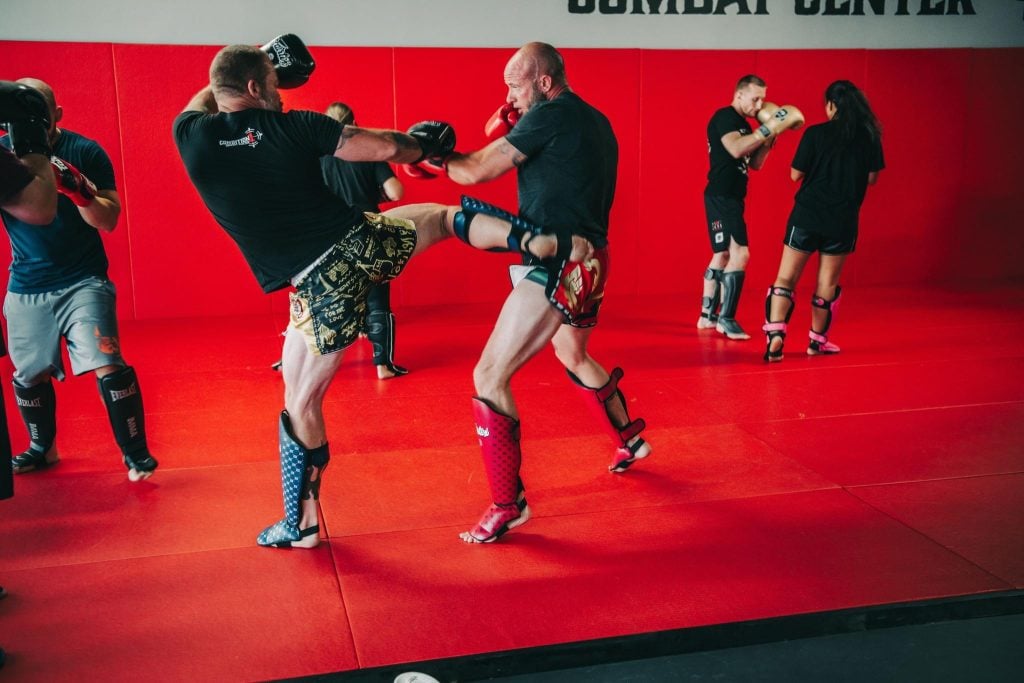
Mixed martial arts, muay thai, boxing, and brazilian jiu jitsu training give you a toolkit that feels natural when you need it. Training at the Condition 1 Combat Center muay thai gym, you learn to check kicks, frame with shins and forearms, and manage clinch space. That framing carries over to crowded trains and chaotic bar exits where you need to keep strangers from trampling you while you steer your group toward a door.
The boxing gym curriculum works your jabs, head movement, and footwork. Those translate to distance control and the ability to pivot around obstacles without colliding. Boxers also tend to keep their chins tucked and eyes up. On the street, that posture alone reduces how much surprise can cost you.
From the bjj gym side, brazilian jiu jitsu training teaches you escapes under pressure. The cross-collar choke setup in the gi shows you how quickly neck pressure escalates. More important, it teaches you to hand-fight and create frames against larger people. Students at the Condition 1 Combat Center bjj gym often say the biggest shift was going from panic to problem-solving when pinned against a wall or pinned under someone in a stairwell scuffle.
Mixed into mma training at condition1combat.com, coaches highlight where sport habits can cause trouble in a self defense context. Chasing a finish on concrete, ignoring the second person in the periphery, and entangling on the ground when escape is open are examples. We run short live rounds where the bell never saves you, only exits do. It resets priorities.
Scenario notes from the field
Two quick examples stand out from student experiences.
A teacher parked two rows from a school’s side door noticed a man pacing between cars at dusk. She clicked her flashlight on before she reached her vehicle, scanned under the chassis for feet, and swept the back seat. The man shifted away once the light angled toward him. Nothing happened, which was the point. She later said the biggest change was simply remembering the light was in her pocket. Reps in class made it a reflex.
Another student, a restaurant manager, practiced a firm hand extension and verbal boundary in self defense classes: palm up, elbow down, “Back up, give me space.” On a late close, a drunk patron got too close in the lot. The student stepped left, put the hand up, and repeated the phrase while retreating to better light. Security footage showed the patron veer off. No strike thrown, no report filed, just a safe exit. The manager attributes it to having a clean script and a simple step pattern he trained in boxing rounds.
Verbal skills as a first line of defense
If you can set boundaries with words, you protect your body and your job. We teach students to speak from the diaphragm, lower pitch slightly, and choose short sentences. Long statements give people room to argue. Short ones end the conversation. Avoid insults. Focus on action.
Commands work better than questions. “Stop there,” beats “What do you want?” The former sets a rule. The latter invites a story. If someone closes distance after a clear command, you are getting information about intent, and you can escalate to movement and tools with more certainty.
Legal and ethical considerations that actually matter
The law cares about reasonableness and proportionality. Pepper spray, flashlights, and alarms are legal in most places, but check local statutes. If you carry any weapon, get trained by a qualified instructor, understand storage and transport rules, and learn articulation: what you perceived, what you did to avoid contact, why your action matched the threat.
Recordings help. Your phone’s voice memo set to a quick-start tile can capture context, but do not delay calling 911. When you speak to dispatch, start with your location, then the nature of the emergency, then your description, then stay on the line. After an incident, avoid speculating. Facts first, opinion later with counsel if needed.
We stress at the mma gym Condition 1 Combat Center that your goal is not to win a fight, it is to avoid harm and legal fallout. The best victory is leaving with nothing to explain.
Travel, nightlife, and workplace adjustments
Different environments ask for small tweaks. For air travel, you will leave pepper spray at home, but the flashlight, a compact bandage, and a whistle still pass through, depending on local rules. Keep your boarding pass and ID in an accessible pouch so you are not fumbling near the checkpoint where attention is high and patience low.
For nightlife, footwear is the most underrated piece of EDC. If you cannot move, you cannot leave. Swap slick soles for something with tread. Keep cash separate from cards for a fast pay-and-go option at a street vendor. If you wear a jacket, put the light and spray where your hands naturally drop. Practice drawing in that jacket. Sunglasses at night reduce awareness indoors. Clip them away.
At work, anchor your items in desk drawers so you can grab them without looking. If your job involves delivery or fieldwork, pre-program addresses and avoid pulling your phone out on the sidewalk. Step inside a lobby or over to a storefront alcove before checking directions.
Building your training around daily life
Consistency beats intensity. The condition1combat.com mma training calendar is designed to let people mix disciplines without burning out. A practical plan:
- One stand-up striking session per week for distance control, whether at the Condition 1 Combat Center boxing gym or muay thai gym schedule.
- One grappling session for positional escapes, ideally brazilian jiu jitsu training with live rounds at the Condition 1 Combat Center bjj gym.
- One self defense class per week focused on scenarios, boundary-setting, and tool work.
Students with family and work commitments often drop to two classes a week during busy seasons. The key is to keep a minimum contact point so skills do not drift. Fifteen minutes of solo shadowboxing or shrimping drills at home maintain movement patterns. Integrate your EDC draws into that time. Put the timer on for five minutes and cycle light, phone, and spray retrievals between rounds.
Fitness that supports real-world tasks
You do not need a perfect engine to stay safe, but you need enough. We aim for the ability to jog 2 to 3 minutes, brisk walk 5 to 10, and hold a plank for 30 to 45 seconds. Those numbers are not glamorous. They are the difference between gasping after one block and arriving able to speak clearly to 911.
Grip strength matters. Hanging from a pull-up bar for 20 to 30 seconds translates to better clinch framing and the ability to pull a door shut while someone else tugs. Farmer carries with grocery bags or a pair of dumbbells teach your body to manage shifting loads, just like wrangling kids and backpacks to the car when you need to move quickly.
The small refinements that separate prepared from performative
Prepared people test their systems. Performative carry stays pristine and untried. Rotate batteries every quarter and write the date on your flashlight cell with a marker. Spray a short burst of pepper spray at a safe target outdoors so you know the pattern and how your hand reacts to the trigger. Replace it before expiration.
Practice speaking your home address. Under stress, even your own street name can slip. Set your phone’s emergency SOS settings and know how many button presses trigger a call so you do not pocket dial the police. If you often wear gloves, see if you can still activate your phone and flashlight with them on.
When something feels off in your environment, leave without apology. Students sometimes hesitate because they worry about seeming rude. Rudeness is cheaper than harm. If a friend protests, you can always circle back or send a message.
How classes stitch it all together
Self defense classes at Condition 1 Combat Center are where these parts merge. You rehearse boundary language, you move with a partner through a late-night parking scenario, you draw your light while stepping off the centerline, you control a wrist and frame off a shoulder when someone grabs, you disengage with eyes up, then you practice a clean 911 call while breathing settles. The feedback loop is immediate. You find your weak pockets, your clumsy jacket, the phrase that does not sound like you, and you fix them in one session.
Condition 1 Combat Center mma training pushes your gas tank so that in a real moment, you still have breath to speak. The muay thai gym hours sharpen your clinch instincts. The boxing gym reps calibrate your footwork so exits appear faster. The bjj gym rolls teach you that panic is optional when pinned. The condition1combat.com team ties that all to a simple rule: use the least force needed to get home safe.
A final word on mindset
Preparedness should feel light. If it weighs you down, you will set it down. Build a kit you actually carry, practice skills you can perform on a tired Tuesday, and keep your eyes a little wider than your screen. Think in layers: awareness, position, voice, movement, tools, and aftermath. When you train those layers at a place like the mma gym Condition 1 Combat Center and check them in your daily routine, you reduce drama and increase options.
Most days, nothing happens. On the day something does, the boring reps pay off. You speak clearly. Your light is in the right pocket. Your feet are already moving. You create space, make a call, and you get home. That is the quiet win we train for at condition1combat.com.